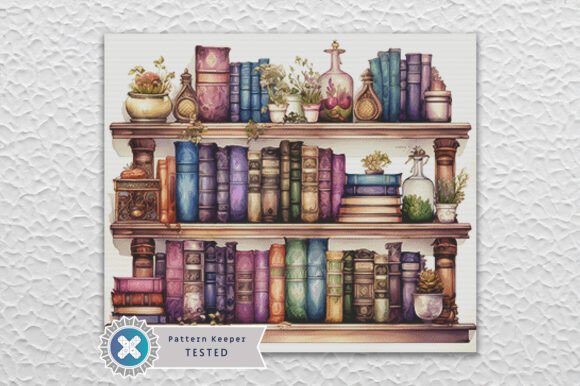
Bookshelf Plants Cross Stitch Pattern
A Thoughtful Fit for Boutique Home Decor & Giftable Handmade Goods
As an embroidery seller who’s curated over 200 cross stitch patterns for Etsy and local craft fairs, I approached the Bookshelf Plants Cross Stitch Pattern with a clear question: does this design translate into real-world products that sell—not just stitch well? The answer is yes—but with intention. This isn’t a quick-stitch wall hanging for beginners. It’s a full-coverage, detailed composition built for advanced stitchers, and that specificity shapes its strongest commercial uses.
Visual Personality: Quietly Modern, Warmly Intellectual
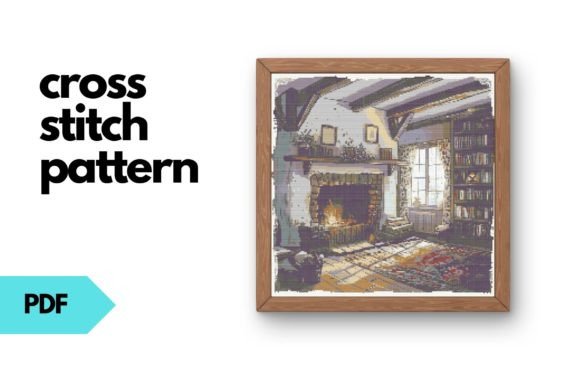
The title alone tells a story—bookshelf plants evokes cozy libraries, sunlit reading nooks, and grounded, thoughtful living. Visually, it leans into modern botanical charm: layered foliage, subtle texture variation, and intentional negative space around shelves and stems. It’s not overly feminine or whimsical—it’s elegant without being stiff, rustic without being folksy, and minimal without feeling sparse. That balance makes it unusually versatile across product categories: think embroidered kitchen towels for a boutique café, linen pillow covers for a Scandinavian-inspired home brand, or baby blankets with soft, meaningful symbolism (books + growth + nature).
Where This Design Truly Shines in Your Product Line
Because of its scale (350w × 300h stitches) and 105 DMC thread count, the Bookshelf Plants Cross Stitch Pattern excels where detail matters and customers expect craftsmanship. Here’s how it supports high-intent listings:
- Etsy listings: Paired with lifestyle photography—say, stitched on heavyweight linen and styled beside a ceramic mug and open hardcover book—it reads as premium, intentional, and gift-ready. Buyers searching “botanical cross stitch,” “literary home decor,” or “slow stitching pattern” will linger.
- Personalized gifts: Add a monogrammed shelf tag, custom book titles, or a birth month plant to elevate it beyond generic. The density allows for delicate customization without sacrificing clarity.
- Boutique merchandise: Perfect for small-batch apparel like organic cotton tote bags or unisex sweatshirts—just stitch the central shelf motif (cropped thoughtfully) for instant cohesion and quiet sophistication.
- Handmade home decor: On tea towels, aprons, or framed hoop art, it communicates care and curation—ideal for shops targeting readers, educators, librarians, and plant lovers.
- Printable mockups & social previews: Because it’s a Graphics-type file on Creative Fabrica, you can generate clean digital mockups fast—great for Instagram carousels, Pinterest pins, or email campaign visuals before stitching a single thread.
Practical Considerations Before You List
This isn’t a “drop-in-and-stitch” design—and that’s part of its value. But it demands planning:
- Test before you list: Print the chart and stitch a 4″ × 4″ section first. Check contrast between adjacent greens and browns—some DMC substitutions may be needed depending on your fabric base (ecru vs. white Aida, linen tone, etc.).
- Photograph on real fabric: The finished dimensions at 14-count (25″ × 21.5″) mean it’ll dominate a hoop or frame. Capture it stitched on your intended end-product—e.g., mounted on a canvas-backed kitchen towel—not just as a flat chart.
- Thumbnail readability matters: Zoom out to Etsy listing size (300px wide). Does the shelf structure still read clearly? Does the plant silhouette hold shape? If not, consider offering a simplified version as a companion listing.
- Stitch density & time investment: At 105 colors and full coverage, this is a 40+ hour project for most stitchers. Position it honestly in your description—“for dedicated stitchers seeking immersive, gallery-worthy results”—to manage expectations and attract the right buyer.
- Hoop size & stabilizer needs: With final dimensions exceeding 21 inches, plan for large-format hoops or Q-snap frames. Recommend lightweight cutaway stabilizer for any apparel use (tote bags, sweatshirts) to prevent puckering under dense stitching.
- Licensing check is non-negotiable: Since this is a Creative Fabrica embroidery purchase, review their current commercial license terms *before* selling finished goods. Confirm whether physical resale, digital resale (e.g., as part of a kit), or POD integration is permitted.
Why It Stands Out in a Crowded Market
So many cross stitch patterns default to florals, animals, or quotes—safe, but forgettable. The Bookshelf Plants Cross Stitch Pattern taps into three converging trends: literary nostalgia, mindful indoor gardening, and intentional home styling. It feels personal without being prescriptive. It’s giftable because it carries meaning—a nod to curiosity, growth, and quiet joy. And for your craft business, it adds depth: not just another pattern, but a storytelling piece that invites customers into a slower, more considered way of making and living.
Final Thought for Small Shop Owners
If you’re building a cohesive brand—whether focused on slow stitching, literary lifestyle, or botanical home goods—the Bookshelf Plants Cross Stitch Pattern isn’t just another download. It’s a visual anchor. Use it to unify product photography, guide color palettes (think sage, oat, terracotta, deep navy), and deepen your messaging. Just remember: let the design breathe. Don’t crowd it with extras. Its strength is in its thoughtful composition—and that same intention should guide how you present it to your buyers.